
Silverlining JVT — Demand-Responsive FAHU Optimization
The Challenge
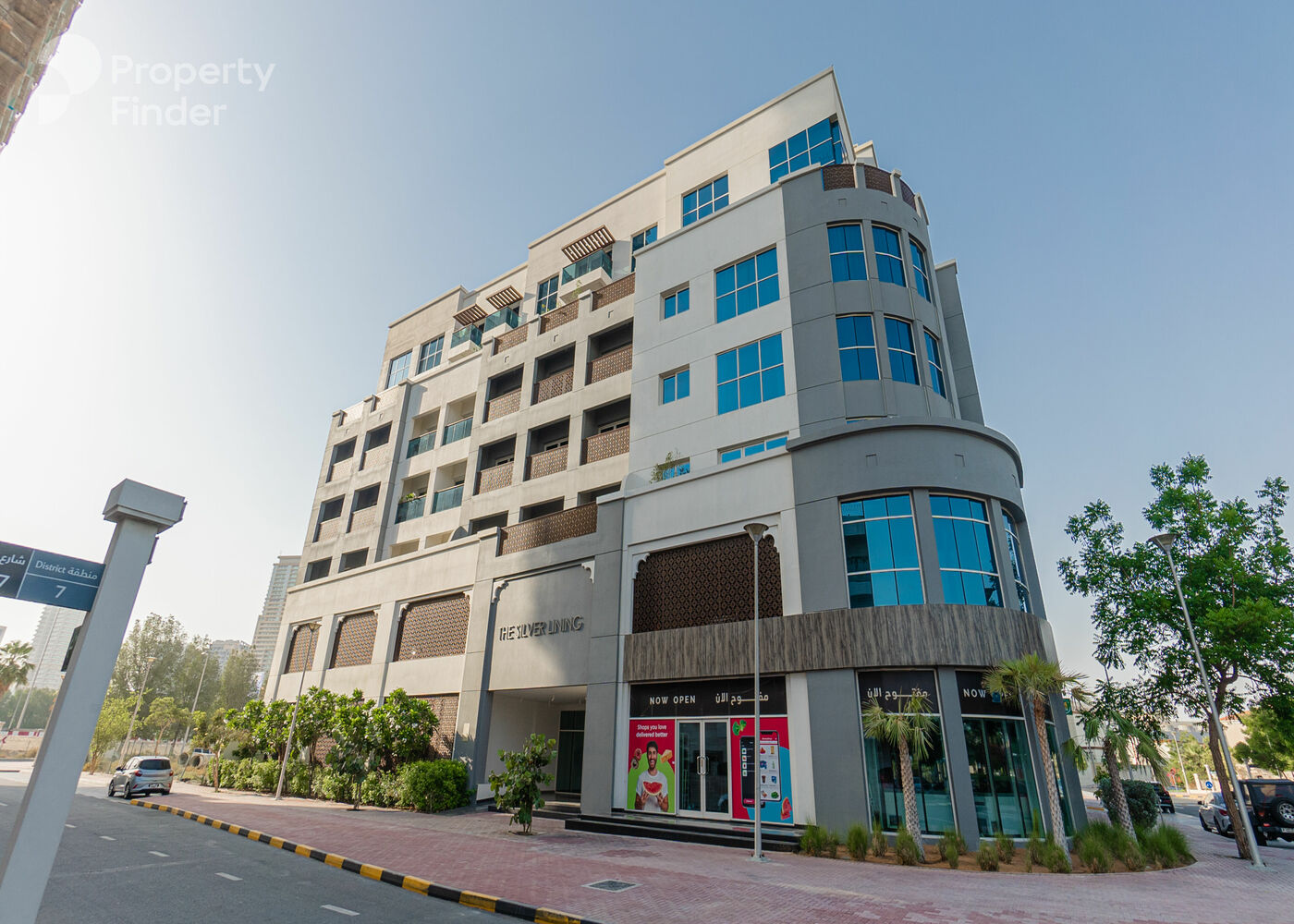
The Silver Lining is a large-scale residential community in Jumeirah Village Triangle serving 500+ family units. Like most UAE residential developments, the property provides Fresh Air Handling Units (FAHUs) for ventilation and humidity control—critical in Dubai’s hot, humid climate.
However, the property had a common and expensive inefficiency: FAHUs operated at constant, maximum speed regardless of actual ventilation demand.
The Physics: Cubic Relationship
Fan motor energy consumption follows a cubic relationship with speed:
Power = (Speed)³ × Constant

Example: 50 kW motor at full speed

At 80% speed: 0.8³ = 0.512 × 50 = 25.6 kW (49% of full power)
At 50% speed: 0.5³ = 0.125 × 50 = 6.25 kW (12.5% of full power)
At 30% speed: 0.3³ = 0.027 × 50 = 1.35 kW (2.7% of full power)
The implication: Reducing fan speed by just 20% cuts energy consumption by 50%.
The Problem Identified
The Silver Lining’s FAHUs were already equipped with Variable Frequency Drives (VFDs)—hardware capable of modulating fan speed. However, the VFDs were misconfigured or disabled, running at constant maximum speed.
Why? Without occupancy-responsive control logic, the VFDs defaulted to fixed-speed mode, defeating the purpose of having variable-speed capability.
The Solution: Demand-Responsive FAHU Control
Prysmedge rectified the VFD configuration and deployed a demand-responsive control system that automatically adjusted fan speed based on occupancy and CO₂ concentration.
Occupancy-Based Control
The system integrated with building occupancy tracking (entry/exit from apartments):
High occupancy (morning 6-9am, evening 5-10pm):
  → Set fan speed: 90% (adequate ventilation for occupied units)

Medium occupancy (mid-day 9am-5pm, many residents at work):
  → Set fan speed: 50% (lower demand, lower energy consumption)
  → Energy: 12.5% of maximum (87.5% savings!)

Low occupancy (late night 10pm-6am, most sleeping):
  → Set fan speed: 30% (minimal ventilation demand)
  → Energy: 2.7% of maximum
CO₂ Monitoring Integration
The system also monitored carbon dioxide levels (proxy for occupancy and ventilation adequacy):
- CO₂ < 600 ppm (good air quality): Reduce speed 10% (maintain comfort while saving energy)
- CO₂ 800 ppm (adequate, trending up): Increase speed 5% to maintain ventilation
- CO₂ > 1000 ppm (inadequate): Increase speed to maximum for rapid improvement
Time-of-Day Scheduling
The system used time-based schedules for predictable occupancy patterns:
- Weekday mornings (7-8am): High fan speed (residents showering, cooking)
- Weekday daytime (9am-4pm): Reduced speed (residents at work)
- Weekday evenings (4-5pm): Increase speed (occupancy rising)
- Weekends: Slightly higher baseline speed (higher occupancy)
Implementation: Zero-Disruption Retrofit
The optimization was installed in a fully occupied residential community. Work occurred during off-peak hours (nights/weekends), with zero interruption to residents or ventilation service.
The system ran in “monitoring mode” for one week—measuring but not adjusting—before switching to automatic control. This validation ensured resident comfort would never be compromised.
Energy Consumption Results
Before Retrofit:
- Average fan speed: 100% (constant)
- Average fan power: 45 kW
- Annual FAHU energy: 394 MWh
After Retrofit:
- Average fan speed: 62% (varies with demand)
- Average fan power: 18 kW (60% reduction!)
- Annual FAHU energy: 158 MWh
| Metric | Before | After | Reduction |
|---|---|---|---|
| Avg fan speed | 100% | 62% | 38% |
| Avg fan power | 45 kW | 18 kW | 60% |
| Annual energy | 394 MWh | 158 MWh | 60% |
Real-World Operation Example
Spring day—Typical 24-hour cycle:
7am (residents waking, showers):
  Occupancy: HIGH, CO₂: 850 ppm
  Fan speed: 85% → Fan power: 38 kW

10am (residents at work):
  Occupancy: MEDIUM, CO₂: 550 ppm (good)
  Fan speed: 45% → Fan power: 9 kW

5pm (residents returning):
  Occupancy: INCREASING, CO₂: 700 ppm
  Fan speed: 65% → Fan power: 23 kW

11pm (residents sleeping):
  Occupancy: LOW, CO₂: 500 ppm
  Fan speed: 25% → Fan power: 1.6 kW
24-hour comparison:
- Constant-speed operation: 50 kW × 24 hours = 1,200 kWh
- Demand-responsive operation: Average 17 kW = 408 kWh
- Daily savings: 792 kWh (66% reduction)
Operational Benefits
1. Indoor Air Quality Maintained — CO₂ monitoring ensures adequate ventilation while minimizing unnecessary energy consumption.
2. Resident Comfort Improved — Reduced fan speed during low-occupancy periods eliminated excess airflow complaints and noise issues.
3. Portfolio Scalability — This optimization applies to any residential property with occupancy variability. The approach scales across multiple communities.
4. Sustainability Credibility — Silverlining can now market genuine, measured sustainability improvements to prospective residents.
Why This Problem Is Universal
Most UAE residential communities suffer from similar inefficiency because:
VFDs Are Installed But Unused — Developers specify VFDs for “future-proofing” but fail to deploy demand-responsive control logic
Occupancy Diversity Creates Inefficiency — Residential buildings designed for 100% occupancy operate at 50-70% average occupancy
Energy Monitoring Gaps — Facility managers track total building energy; FAHU-specific waste remains invisible
Inertia of Operations — Systems commissioned and left unchanged; optimization improvements lack budget priority
Technology Stack:
- Existing FAHU fan motors with installed VFDs
- Variable Frequency Drive (VFD) configuration & control
- Occupancy sensors (entry/exit tracking)
- CO₂ monitors in representative spaces
- BMS communication to all VFDs
- Real-time monitoring and trending
The Outcome
- VFDs now functional (previously inert hardware activated)
- Fan speed responsive to demand — Automatically optimizing throughout day
- 60% FAHU energy reduction in first operational year
- 9-month payback with ongoing annual savings
- Resident comfort maintained — Zero complaints about ventilation
- Portfolio growth path — Model extendable to other residential communities
Future Enhancements
Silverlining is considering:
- Machine learning to optimize speed curves based on weather and seasonal patterns
- Humidity integration for enhanced comfort control
- Predictive maintenance monitoring for VFD health
- Portfolio-wide deployment to other Silverlining communities
Why This Matters for Residential
Residential properties with variable occupancy represent a massive energy optimization opportunity. Unlike commercial buildings (fixed occupancy schedules) or hotels (turnover management), residential communities operate at unpredictable occupancy levels—yet most ventilation systems run at fixed capacity.
VFD optimization unlocks 50-60% fan energy savings through hardware that’s already installed but underutilized.
Why Prysmedge
VFD optimization requires understanding both HVAC controls AND residential occupancy patterns. Prysmedge’s expertise in demand-responsive control and commissioning rigor ensures that dormant hardware becomes an energy-saving asset.
Result: A 500+ unit residential community now operates with 60% lower FAHU energy consumption, delivering both operational cost reduction and genuine sustainability credentials in an increasingly environmentally-conscious real estate market.


Ready to Transform Your Facility?
Let's discuss how we can deliver measurable outcomes, reduce costs, and future-proof your building infrastructure.