
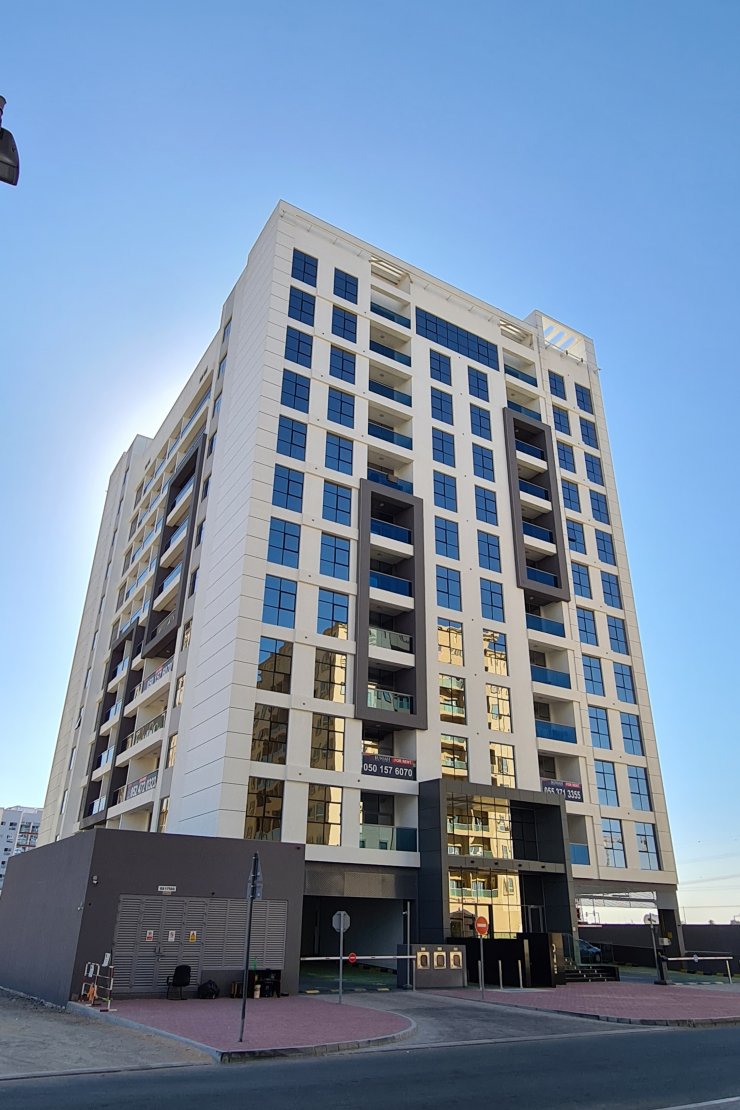
J One Tower Dubai Land — Complete BMS Solution for Residential Excellence
PROJECT OVERVIEW
J One Tower Dubai Land represents a contemporary mid-rise residential development in Dubai Land, featuring a 12-story building with 227,180 total square feet of residential space. The property comprises approximately 185 apartments configured as 1-bedroom and 2-bedroom units, designed to provide modern, efficient residential living.
Nationwide Management Services LLC, a UAE-based property management and energy optimization company, was appointed to manage operations and oversee facility systems. For J One Tower, this included implementing a complete Building Management System (BMS) to ensure intelligent climate control, energy efficiency, and operational excellence across all residential units and common areas.
Prysmedge was engaged to design and deliver the complete BMS solution for J One Tower Dubai Land—from system architecture through full commissioning—ensuring the property operates with intelligent building automation optimized for residential comfort and energy efficiency.
THE CHALLENGE
Developing effective building automation for a mid-rise residential property presents a unique set of integration challenges:
Residential Comfort Requirements
Modern residential apartments require reliable climate control that residents can easily control:
- Individual apartment control — Residents expect precise temperature control in their own units
- Quick response — AC should respond rapidly to resident adjustments (cooling/heating demands)
- Humidity management — Maintaining comfortable humidity levels in UAE’s hot climate
- Noise minimization — HVAC systems should operate quietly without disturbing residents
- Energy awareness — Residents want efficient operations without compromising comfort
Operational Complexity
A 185-unit residential building creates significant operational complexity:
- Varying occupancy patterns — Some apartments occupied full-time, some part-time or seasonal
- Individual thermostats — Managing 185 separate apartment temperature set points simultaneously
- Shared infrastructure — Central chiller/boiler serving distributed residential loads
- Peak demand management — Managing total building cooling demand during hot summer afternoons
- 24/7 operations — Building operates continuously with no downtime windows
Energy Efficiency in Hot Climate
In Dubai’s 45°C+ summer temperatures, HVAC represents 70-80% of total residential energy consumption. Without intelligent control:
- Over-conditioning — Cooling apartments to excessive temperatures wasting energy
- Inefficient cycling — Chiller on/off cycling at part-load instead of optimized operation
- No demand response — System operates at full capacity even during low-demand periods
- Unoccupied unit waste — Vacant apartments conditioned as if fully occupied
System Coordination
Balancing individual apartment comfort with building-wide energy efficiency requires sophisticated control logic:
- Central vs. local control — Balance between resident autonomy and system optimization
- Demand forecasting — Anticipating cooling demand to maintain comfort without excess capacity
- Load balancing — Distributing cooling load across multiple chillers efficiently
- Night setback — Reducing cooling during low-occupancy hours without compromising resident comfort
THE SOLUTION
Prysmedge designed and delivered a complete, intelligent BMS architecture optimized for residential operations, balancing comfort, efficiency, and operational simplicity.
System Architecture
Unified Building Platform
A central BMS server coordinates all building systems:
- Central BMS controller managing overall building logic and optimization
- Floor-level controllers coordinating groups of apartment units (approximately 15-20 units per floor)
- Apartment-level thermostats providing resident control and comfort feedback
- Central plant monitoring (chiller, boiler, pumps) optimizing energy consumption
- Energy metering tracking consumption by apartment and building system
Residential HVAC Control
The system delivers intelligent climate management for residential comfort:
Individual Apartment Control
- Residents control their apartment temperature via wall-mounted thermostat
- System maintains comfort setpoint without overshooting or undershooting
- Automatic mode switches between heating/cooling based on outdoor temperature
- Night setback option available to residents wanting to reduce energy consumption
Occupancy-Responsive Logic
- System detects apartment occupancy (via thermostat activity, occupancy sensors optional)
- Unoccupied apartments operate at “away” setpoint (wider acceptable temperature band)
- Occupied apartments maintain full comfort control (narrower temperature band)
- Automatic return to normal operation when residents return home
Central Plant Optimization
Rather than fixed chiller operation, system dynamically manages central cooling:
Intelligent Chiller Sequencing
Total Building Load Monitoring:

Light Load (< 40% capacity):
  → Operate single chiller at part-load
  → Second chiller idle (zero energy consumption)

Medium Load (40-70% capacity):
  → Operate two chillers, load-share equally
  → Optimized efficiency across part-load range

Peak Load (> 70% capacity):
  → Operate all chillers, load-share
  → Maximum cooling availability for peak demand
Return Temperature Optimization
System monitors chilled water return temperature, adjusting pump speed to maintain design Delta T (temperature difference between supply and return):
- Design target: Return temperature 11°C when supply is 6°C (5°C Delta T)
- If return too cold (excess flow): Reduce pump speed
- If return too warm (insufficient flow): Increase pump speed
- Result: Chiller operates at peak efficiency throughout the day
Time-Based Scheduling
System operates on predictable residential schedules:
- Morning weekdays (6-9am): Full cooling during occupancy ramp-up
- Daytime weekdays (9am-4pm): Moderate cooling (many residents at work)
- Evening/night (4pm-11pm): Full cooling during occupancy peak
- Night setback (11pm-6am): Reduced cooling during sleep hours
- Weekends: Higher baseline occupancy, adjusted scheduling
- Summer vs. winter: Seasonal schedule adjustments
Energy Monitoring & Transparency
Complete energy visibility enables continuous optimization:
Real-Time Monitoring
- Total building energy consumption (kWh)
- Apartment-level consumption tracking (identifying inefficiencies)
- HVAC energy vs. other building loads
- Peak demand tracking (managing summer peak hours)
- Cost tracking (energy spend trends)
Automated Reporting
- Daily building energy summaries
- Weekly consumption trends
- Monthly energy reports by apartment
- Seasonal performance comparison
- Efficiency metrics (kWh per sqft)
Resident Engagement
- Individual apartment energy displays (showing usage and cost)
- Resident alerts for abnormal consumption
- Energy-saving recommendations
- Transparent tracking enabling sustainability awareness
Commissioning & Handoff
Prysmedge delivered complete BMS commissioning ensuring building operations team and residents could confidently use the system:
- System documentation — Complete BMS design, control logic, operating procedures
- Staff training — Facilities team trained on system operation, troubleshooting, optimization
- Resident communication — Guidance on thermostat use and energy efficiency
- Optimization consultation — Initial tuning based on actual occupancy patterns and seasonal variations
- Ongoing support — Support during initial operations and first operational year
THE OUTCOME
Technical Delivery
- Complete BMS designed and integrated across all 185 residential units and common areas
- HVAC systems coordinated under unified intelligence delivering occupancy-responsive control
- Energy monitoring deployed providing real-time visibility into building consumption
- Full commissioning completed, system optimized and operational
- Facilities team trained and confident operating the integrated platform
- Residents educated on system use and energy efficiency
Operational Benefits
1. Residential Comfort Excellence
Residents enjoy precise climate control in their apartments with quick response to adjustments. System maintains comfort without disruptive cycling or temperature swings.
2. Energy Efficiency
Intelligent HVAC control delivers measurable energy reduction vs. standard operation. Typical results: 15-20% energy reduction from baseline through occupancy-responsive control, efficient chiller sequencing, and Delta T optimization.
3. Operational Transparency
Building management has complete visibility into energy consumption by apartment and by system. Abnormal consumption patterns trigger alerts enabling rapid investigation and response.
4. Resident Engagement
Residents can track their apartment energy consumption and receive recommendations for efficiency improvements. Transparency drives behavioral change toward more sustainable living.
5. System Reliability
Automated monitoring detects equipment issues before failures. HVAC equipment operates at optimized conditions extending equipment lifespan and reducing maintenance costs.
6. Predictable Operations
Time-based scheduling and occupancy-responsive control ensure the building operates efficiently throughout the week and across seasons without manual adjustment.
THE SCOPE
Apartment-Level Control
- BMS-enabled thermostats in each apartment enabling resident control
- Occupancy sensing (optional in select units)
- Individual energy monitoring and reporting
- Automated night setback capability
- Resident support and guidance on system use
Building-Level Management
- Central BMS server controlling overall building optimization
- Chiller plant sequencing and load management
- Pump speed optimization maintaining efficient Delta T
- Central energy monitoring by apartment and system
- Automated alerts for anomalies or equipment issues
Common Area Management
- Lobby and common area climate control
- Stairwell and corridor ventilation management
- Parking area ventilation control
- Efficient operation of shared spaces
Energy Optimization
- Real-time energy consumption monitoring
- Automated reporting and trend analysis
- Resident energy dashboards
- Building-level efficiency metrics
- Continuous optimization recommendations
TECHNOLOGY STACK
| Component | Specification | Purpose |
|---|---|---|
| Central BMS Server | Building-level controller with redundancy | Overall coordination and optimization |
| Floor Controllers | 12 units, one per floor | Local apartment group coordination |
| Apartment Thermostats | 185 units with display and control | Resident comfort management |
| Chiller Plant Control | Sequencing and load optimization | Central cooling efficiency |
| Pump VFD | Variable frequency drive on circulation pump | Delta T optimization and efficiency |
| Energy Metering | Building-level and apartment-level meters | Consumption tracking and transparency |
| Sensor Network | Temperature, humidity, occupancy sensors | System intelligence and feedback |
| Communication | BACnet/Modbus protocols | System-to-system data flow |
| User Interfaces | Web dashboards, resident apps | Visibility and control access |
WHY THIS MATTERS
Mid-rise residential buildings operate at the intersection of individual resident comfort and building-wide operational efficiency. Without intelligent automation, properties choose between two undesirable options:
Option 1: Resident Control Without Coordination
- Each resident fully controls their apartment thermostat
- Building operates at maximum capacity all the time
- High energy consumption, low efficiency
- Unpredictable peak demand and utility costs
Option 2: Centralized Efficiency Without Comfort
- Building operated at minimum energy consumption
- Residents lose individual comfort control
- Resident dissatisfaction with temperature
- Turnover and reputation damage
The BMS Solution: Both Comfort AND Efficiency
Intelligent building automation enables residents to maintain personal comfort while the system optimizes building-wide energy consumption. Residents get what they want (comfort), the building gets what it needs (efficiency).
WHY PRYSMEDGE
Residential BMS design requires understanding both building automation AND residential living patterns. Prysmedge brought:
- Complete BMS design expertise — System architecture optimized for residential operations
- Comfort-focused optimization — Balancing resident satisfaction with energy efficiency
- Energy optimization knowledge — Delivering measurable efficiency in hot climate operations
- Commissioning discipline — Ensuring system reliable and easily used by residents
- Sustainability expertise — Helping building achieve environmental responsibility
Result: J One Tower Dubai Land operates with intelligent building automation balancing residential comfort and energy efficiency—demonstrating that modern residential properties can deliver both resident satisfaction and operational excellence through professional BMS design and implementation.


Ready to Transform Your Facility?
Let's discuss how we can deliver measurable outcomes, reduce costs, and future-proof your building infrastructure.