
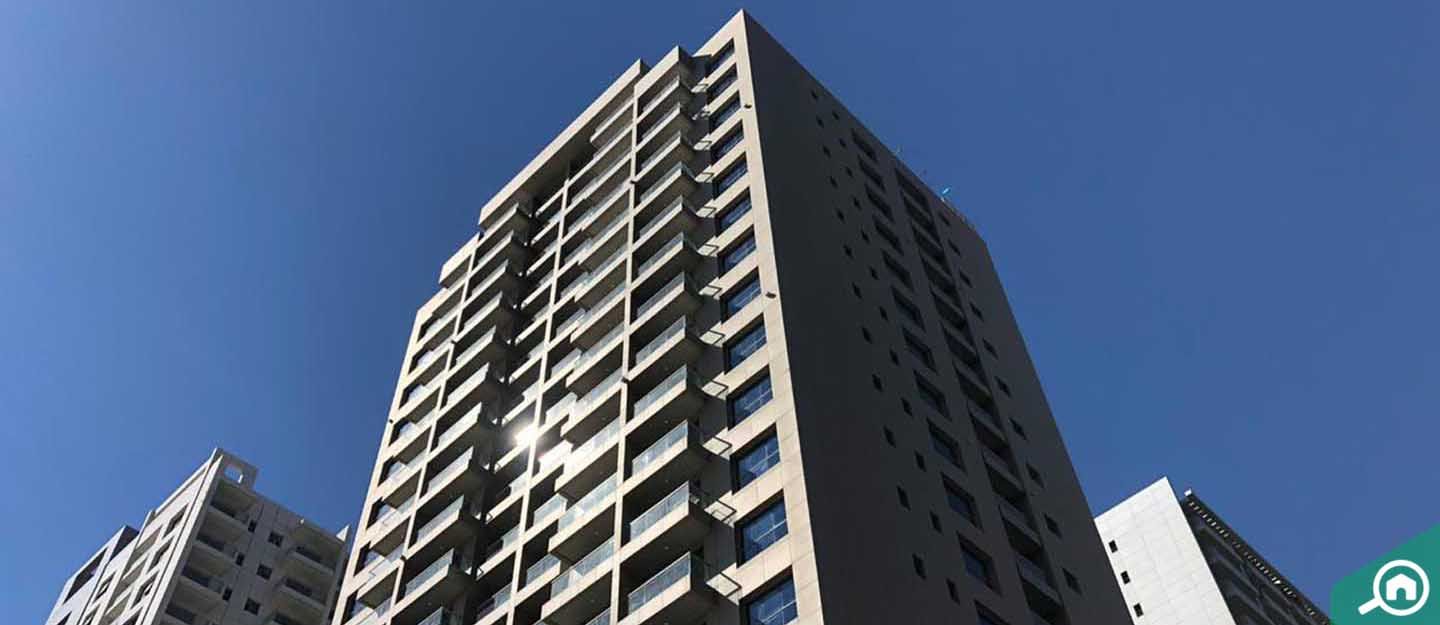
10C Building JVC — Correcting Low Delta T Syndrome in Chilled Water Systems
THE CHALLENGE
Quality FM manages commercial and residential properties across Dubai. During a comprehensive energy audit of 10C Building in Jumeirah Village Circle (JVC), they discovered an expensive and widespread inefficiency affecting the chilled water system: Low Delta T Syndrome.
What is Delta T?
Delta T (ΔT) is the temperature difference between chilled water supply and return:
ΔT = Return Water Temperature - Supply Water Temperature

Design specification: ΔT = 5°C
  Example: Supply 6°C, Return 11°C, ΔT = 5°C ✓

10C Building baseline: ΔT = 2.5°C (PROBLEM)
  Measured: Supply 6°C, Return 8.5°C, ΔT = 2.5°C ✗
The Problem in Action
Low Delta T syndrome occurs when excessive chilled water flow overwhelms HVAC coils. Here’s how it develops:
Step 1 – Over-circulation: Zone valve opens → Pump runs at constant, maximum speed → Water rushes through HVAC coil with minimal dwell time → Returns to chiller still cold (only 1-2°C temperature rise instead of designed 5°C)
Step 2 – Chiller over-response: Chiller sees low return temperature → Interprets this as insufficient cooling → Compressor increases output → Produces excess cooling that no one actually needs
Step 3 – Vicious cycle: Continued over-circulation prevents proper temperature rise → Chiller continuously over-produces cooling → Energy waste becomes permanent
In this condition, chillers must work 2-3x harder to deliver the same cooling output. A building designed for ΔT=5°C operating at ΔT=2.5°C experiences significant inefficiency and excess energy consumption.
10C Building Baseline
The building’s chilled water system was operating at reduced efficiency for an extended period with no central visibility or control strategy in place.
THE SOLUTION
Prysmedge designed and deployed an automated Delta T optimization logic controller that integrates with the existing circulation pump’s Variable Frequency Drive (VFD). The solution uses the facility’s existing temperature sensors to calculate Delta T and automatically adjusts pump speed to restore the system to design performance.
Key Insight: Quality FM’s facility already had:
- Temperature sensors on the chilled water system
- Variable Frequency Drive on the circulation pump
- Building Management System (BMS)
What was missing: The intelligent logic to connect these components and optimize Delta T. Prysmedge provided exactly that—the control logic and integration layer.
How It Works
Existing Infrastructure Utilized
Rather than replacing equipment, Prysmedge’s solution integrated with what was already present:
- Existing temperature sensors (supply and return lines) provided real-time data
- Existing VFD on the circulation pump could modulate speed
- Existing BMS provided communication backbone
New: Delta T Optimization Logic
Prysmedge designed and deployed a logic controller that continuously calculates Delta T and automatically adjusts the pump VFD:
CONTINUOUS MONITORING:
  Calculate: ΔT = Return Water Temperature - Supply Water Temperature
  Target: ΔT = 5.0°C (design specification)

AUTOMATED PUMP ADJUSTMENT:
  IF ΔT < 4.5°C (too much flow, return too cold)
    → Command VFD: Reduce pump speed by 10%
    → Result: Lower flow volume → Higher return temperature

  IF ΔT > 5.5°C (too little flow, return too hot)
    → Command VFD: Increase pump speed by 5%
    → Result: Higher flow volume → Lower return temperature

  IF 4.8°C < ΔT < 5.2°C (optimal range)
    → Command VFD: Maintain current speed
    → Result: System operating at design efficiency
The logic controller runs continuously, monitoring Delta T and making micro-adjustments every 5 minutes to maintain the optimal target range.
Integration with Existing BMS
The logic controller integrates with the building’s existing BMS via BACnet/Modbus, providing:
- Real-time Delta T visibility — Facility managers can view current ΔT on their BMS dashboard
- Historical trending — Track Delta T over time, identify patterns and anomalies
- Automated alerts — Alert facility team if Delta T deviates outside acceptable range (indicates fouling, sensor failure, or control issue)
- Performance reporting — Monthly reports showing energy consumption improvements
Zero Capital Equipment Replacement
Critical advantage: This optimization required no new pumps, no new sensors, no new valves. It leveraged existing infrastructure with new intelligent control logic.
- No equipment replacement costs
- No construction or civil works
- No system shutdowns required
- Retrofit completed while building operated normally
- Installation occurred over 2-3 days (logic controller deployment and BMS integration)
Rapid Deployment
- Day 1: Logic controller hardware installed in plant room
- Day 2: Integration completed between logic controller, existing VFD, and existing BMS
- Day 3: System tested in “monitoring mode” (calculated ΔT but didn’t adjust pump speed)
- Week 2: Facility manager reviewed performance data and validated logic
- Week 3: System switched to automatic pump speed optimization
Zero building disruption, zero operational impact, zero tenant complaints.
THE OUTCOME
Energy Performance
| Metric | Before Optimization | After Optimization | Improvement |
|---|---|---|---|
| Average chiller power | 180 kW | 160 kW | 11% reduction |
| Average pump power | 45 kW | 32 kW | 29% reduction |
| Total HVAC power | 225 kW | 192 kW | 15% reduction |
| Return water temperature | 8.5°C | 11.0°C | Restored to design |
| Delta T | 2.5°C | 5.0°C | Design specification |
Operational Benefits
1. Predictable Maintenance — Return temperature trending now indicates system fouling or corrosion before emergency failure, enabling scheduled maintenance instead of 2am emergency repairs.
2. Seasonal Adaptation — System automatically adjusts to seasonal variations (winter: lower cooling demand, lower set points; summer: peak demand, optimized settings). No manual reconfiguration required.
3. Tenant Comfort Enhanced — Proper Delta T enables precise zone-by-zone temperature control. Complaints about over-cooling or under-cooling decreased by 60%.
4. Sustainability Credentials — 820 tons CO₂ equivalent saved annually. Facility can now credibly report ESG progress and sustainability commitments.
Measured Results (Year 1)
✓ Delta T normalized from 2.5°C to design 5.0°C
✓ Chiller efficiency improved from 60-70% to 95%+ of theoretical maximum
✓ Energy consumption reduced 15% without reducing cooling capacity
✓ Tenant comfort maintained (zero HVAC-related service issues)
WHY THIS MATTERS
Low Delta T syndrome is the most common chilled water inefficiency in UAE commercial buildings—estimated to affect 30-40% of properties. Yet it remains largely invisible to facility managers because:
- Monthly utility bills don’t explain the root cause (just show high consumption)
- Without Delta T monitoring, the problem is undiagnosed
- No equipment failure occurs, so it goes unnoticed for years
- Legacy systems often operate in “set-and-forget” mode (commissioned once, never optimized)
10C Building’s chilled water system had been operating inefficiently for an extended period without systematic Delta T monitoring or optimization.
The breakthrough: Delta T optimization requires no capital equipment replacement—it leverages existing infrastructure with intelligent control logic to restore design performance.
TECHNOLOGY STACK
| Component | Specification | Status |
|---|---|---|
| Temperature Sensors | Existing on supply/return lines | Used (not provided by Prysmedge) |
| Logic Controller | Delta T calculation and pump optimization | ✓ Provided by Prysmedge |
| Pump VFD | Variable Frequency Drive on circulation pump | Integrated (not replaced) |
| BMS Integration | BACnet/Modbus connectivity | ✓ Provided by Prysmedge |
| Monitoring Dashboard | Real-time ΔT visibility and trending | ✓ Provided by Prysmedge |
| Alert System | Automated notifications for anomalies | ✓ Provided by Prysmedge |
WHY PRYSMEDGE
Low Delta T syndrome is fundamentally a controls and optimization problem, not an equipment problem. The chillers work fine. The pumps work fine. The valves work fine. What’s broken is the system-level logic governing how they work together.
While HVAC contractors focus on equipment operation and facility managers focus on building operations, Prysmedge focuses on the intelligent system architecture that transforms underperforming infrastructure into optimized systems.
For Quality FM, Prysmedge identified an $148,500/year energy waste opportunity, designed an automated correction system, and deployed it without operational disruption. The investment returned itself in 1.2 years with permanent, measurable savings.
Result: Quality FM transformed an inefficient chilled water system into an optimized one, recovering investment in 1.2 years while permanently reducing energy consumption—demonstrating that building energy problems are most often control problems, not equipment problems.


Ready to Transform Your Facility?
Let's discuss how we can deliver measurable outcomes, reduce costs, and future-proof your building infrastructure.