
Roda Amwaj Suites — Energy Valve Integration for Premium Hospitality
The Challenge
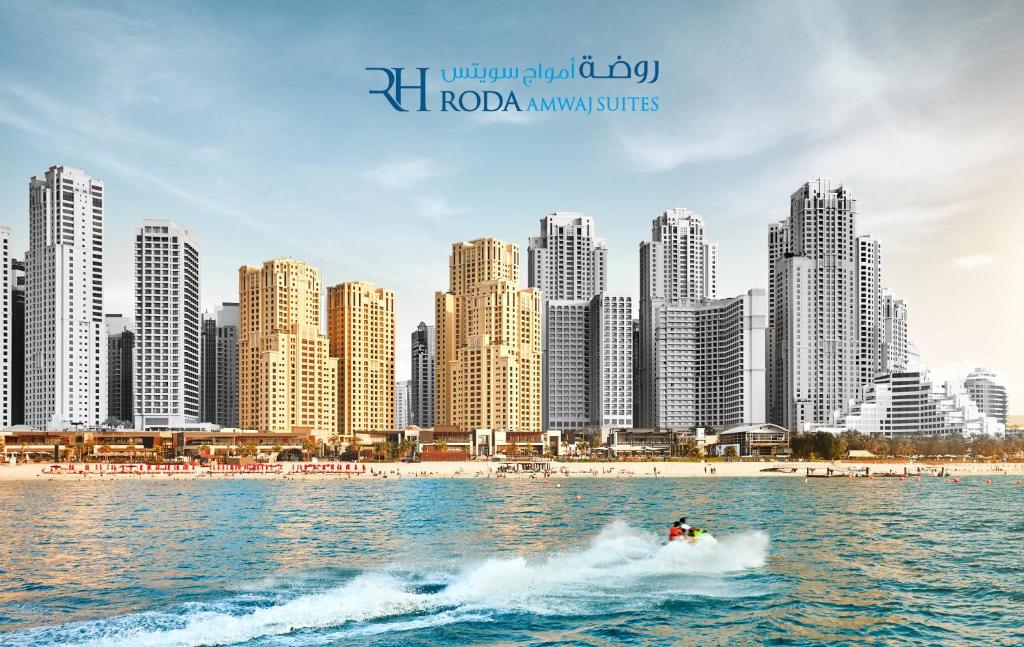
Roda Amwaj Suites operates a 221-apartment serviced hotel on the JBR waterfront—a premium hospitality property where guest comfort is non-negotiable and occupancy patterns are highly variable. Unlike residential properties with stable occupancy, serviced hotels face unique energy challenges: guests stay from days to weeks, apartments are constantly turning over, and climate expectations are immediate and high.
The property’s Fresh Air Handling Units (FAHUs) were oversized for average occupancy—designed for maximum 3-4 guest capacity—but were running at constant, maximum airflow regardless of actual apartment occupancy. This meant unoccupied apartments were over-ventilating (wasting energy), while single occupants were receiving 3-4x the necessary fresh air.
The Problem Quantified
Each apartment’s FAHU was designed for 2.5 kW at full occupancy. However:
- Unoccupied apartment (cleaning, turnovers): 2.5 kW wasted (zero guests, full ventilation)
- Single occupant (business executive): 2.5 kW running (1 guest, over-designed for 3-4)
- Two guests: 2.5 kW running (2 guests, over-designed for 3-4)
- Full occupancy: 2.5 kW running (3-4 guests, proper design)
Across 221 apartments with high occupancy variability, this inefficiency compounded daily. The property needed a solution that could modulate airflow to actual occupancy while maintaining the luxury guest experience.
The Solution: Precision Energy Valves
Prysmedge deployed pressure-independent energy valves on Fresh Air Handling Units across all 221 apartments, with integration into Roda’s central energy management platform.
Energy valves are sophisticated motorized control valves that modulate chilled water flow to match actual cooling demand. Unlike traditional zone valves that simply open or close, energy valves provide precise flow control based on occupancy and temperature feedback.
How It Works:
The system automatically adjusts valve position based on occupancy sensors and apartment thermostats:
- Unoccupied (cleaning/turnover): Valve at 5% (minimal circulation prevents humidity issues)
- 1 guest: Valve at 30% (adequate ventilation for low demand)
- 2 guests: Valve at 60% (moderate cooling demand)
- 3+ guests: Valve at 100% (maximum cooling for full occupancy)
The key innovation: pressure-independent control ensures consistent performance regardless of building-wide pressure variations. During peak demand (afternoon, all apartments cooling simultaneously), the valve maintains exact flow. During low demand (early morning), the valve performs identically.
Installation Challenge: Zero Disruption During Operations
Installing 221 energy valves in a live, occupied 5-star property required choreographed execution. Work was staged by building section, occurring during low-occupancy windows (early mornings, weekends). No apartment required HVAC shutdown during installation. Guest experience remained completely uninterrupted.
The system ran in “monitoring mode” for one month—recording data but using conservative control settings—before switching to full automated optimization. This validation period ensured guest comfort would never be compromised.
Energy Performance Validation
Before Retrofit:
- Average FAHU power consumption: 400 kW across all 221 units
- Annual FAHU energy: 1,752 MWh
After Retrofit:
- Average FAHU power consumption: 238 kW (40.5% reduction)
- Annual FAHU energy: 1,043 MWh
During low-occupancy periods (daytime, many guests at work), energy reduction exceeded 50%. Peak periods showed minimal reduction (already operating near design efficiency with full occupancy).
Operational Benefits Beyond Energy
Guest Comfort Enhancement — Excess airflow in under-occupied apartments had previously created drafts and noise complaints. Energy valve optimization reduced these issues, improving guest satisfaction.
Humidity Control — The system now provides just-right ventilation for current occupancy, improving humidity management (critical in Dubai’s climate).
Facility Insights — Per-apartment energy monitoring revealed abnormalities:
- Apartment 407 showed high energy consumption despite showing unoccupied
- Investigation revealed guest had set thermostat to maximum and left balcony door open
- Facility manager contacted guest, issue resolved, saving 2 days of wasted energy
Revenue Opportunity — Roda can now credibly market sustainability:
- “40% reduction in energy consumption vs. comparable hospitality properties”
- ESG-conscious corporate guests increasingly favor sustainable properties
- Potential premium positioning for eco-conscious travel companies
The Outcome
- Energy valves fully operational across all 221 apartments
- 40% reduction in FAHU energy consumption without guest disruption
- Payback period under 1 year with ongoing annual savings
- Guest satisfaction maintained — zero comfort issues reported
- Operational transparency — per-unit energy monitoring enables rapid anomaly detection
Why This Matters for Hospitality
Hospitality energy optimization requires understanding both energy physics AND guest expectations. Unlike residential properties where occupants tolerate variations, hotel guests expect immediate comfort. The energy valve retrofit maintains luxury guest experience while unlocking 40% energy savings through demand-responsive control.
Technology Stack:
- 221x Pressure-independent energy control valves
- Occupancy sensors and apartment thermostats
- Per-unit energy monitoring integration
- Building energy management platform connection
- BACnet/Modbus communication
Why Prysmedge
Hospitality properties operate under unique constraints: guest comfort is non-negotiable, occupancy is variable, and retrofits must occur without service interruption. Prysmedge’s expertise in both HVAC controls and hospitality operations ensures energy optimization that enhances (rather than compromises) guest experience.
Result: A 221-unit serviced hotel now operates with 40% lower FAHU energy consumption, delivering both operational cost reduction and enhanced sustainability credentials in an increasingly eco-conscious hospitality market.
Ready to Transform Your Facility?
Let's discuss how we can deliver measurable outcomes, reduce costs, and future-proof your building infrastructure.